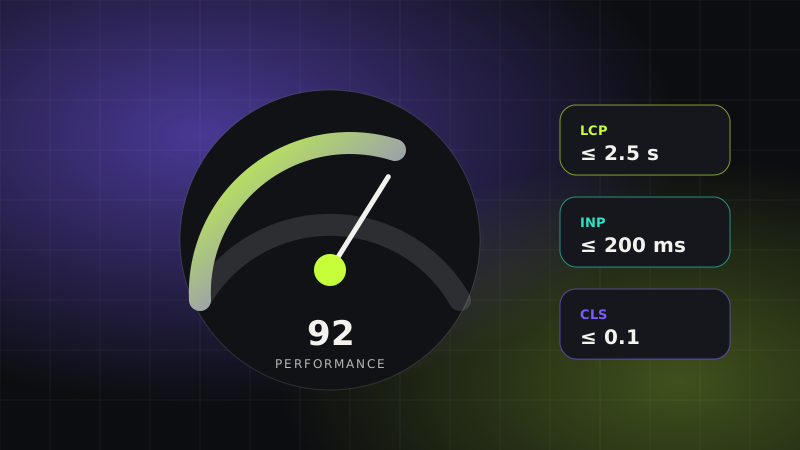
- The three Core Web Vitals are LCP (loading), INP (responsiveness) and CLS (visual stability).
- Good targets: LCP at 2.5 seconds or less, INP at 200 ms or less, CLS at 0.1 or less.
- Images, JavaScript and fonts are the usual culprits.
- Speed is one ranking signal among many, but it also directly affects conversions.
The three metrics in plain English
| Metric | What it measures | Good target |
|---|---|---|
| LCP: Largest Contentful Paint | How quickly the main content appears | 2.5 seconds or less |
| INP: Interaction to Next Paint | How quickly the page reacts when you tap or click | 200 milliseconds or less |
| CLS: Cumulative Layout Shift | How much the layout jumps around while loading | 0.1 or less |
Fixes that make the biggest difference
- Images: use modern formats, correct sizes and lazy loading below the fold.
- JavaScript: remove unused code and avoid heavy libraries for small features.
- Fonts: limit font families and weights, and load them efficiently.
- Server and caching: use a CDN, caching and fast hosting.
- Layout stability: reserve space for images, ads and embeds so content does not jump.
- Third-party scripts: audit chat widgets, trackers and tags that quietly slow every page.
How to measure it
Use Google PageSpeed Insights and Lighthouse for quick checks, and the Core Web Vitals report in Google Search Console to see real-user data over time. Real-user data matters more than a single lab score.
Does speed really affect SEO?
Page experience is one of many signals, and relevant, helpful content still matters most. But slow pages lose visitors before they ever read your content, which hurts enquiries and sales. Speed is worth fixing for that reason alone.
Frequently asked questions
What is a good PageSpeed score?
Aim for green scores, 90 and above, but treat real-user Core Web Vitals data as the real test. A fast-feeling site with a few warnings is better than a perfect lab score and a clumsy experience.
Does website speed affect Google rankings?
It is one of several signals. More importantly, faster sites keep more visitors and convert better.
How often should I test my site?
Monthly, and after significant changes such as a redesign, new plugins or new tracking scripts.